TIES Report #1

Just off two days at Minnesota’s version of ISTE – the TIES 2011 Conference. I’m exhausted. There are million things running through my head. TIES definitely isn’t ISTE, which is some ways is a relief. It was a much more manageable size: 3000 as opposed to 15,000 people. I also appreciated being able to see people I knew and make connections with people that I can connect with in person later.

A few highlights:

  • Keynote speaker today was Gabe Zichermann who was a pinch hitter for an ailing Jane McGonigal. He is an awesome speaker. The quote of the conference: “Do our kids have ADD or is the world just too slow?” It’s worth watching his keynote when it’s up, or catching his TED talk.
  • Last session of the conference for me was with Doug Johnson, the technology director at Mankato Public Schools. Turns out I had met him on a trolley at ISTE. Small world. He’s a great speaker, and had thought -provoking things to say. I think this was my favorite session. Check out his blog.
  • I caught a session by the Superintendant and Tech Director for the Little Falls schools. I had the good fortune to be able to visit them last spring, and I was looking forward to hearing what had happened since then. It sounds like they’ve had a successful rollout of a 1:1 iPad program. What impresses me most about them is their philosophy and how they did the 1:1. It truly was about engaging students and providing them with the skills they needed. It’s worth hearing them speak about their project, or at least checking out their e-book.


More to come after I get some sleep!

How to Integrate

Interesting blog post by an instructional technologist about TPACK, a concept about how to integrate technology into instruction without being so overwhelming.

If I understand, this approach encourages teachers to take their existing curriculum and add appropriate technology – and just try. It might work, it might not. Just try.

Screen shot of interactive technology grid He points out a couple of interactive tools that allow for a progression of integration. The sites give ideas, tips, tools and lay it out in a step-by-step process. The tools he mentions are from The Florida Center For Instructional Technology at the University of South Florida and Northern Arizona University.

After a quick glance, these matrices seem to lay out clear goals to slowly integrate technology in the classroom. It’s not just about technology – it’s about 21st century skills, such as collaboration, creation and critical thinking.

#pencilchat

I’ve been busy all weekend with a theater production at our local community theater. Kids and husband in the show, I’m on the board and moved them to a new online ticketing system that launched with this show. It’s been a little all-consuming.

So I’m late coming to #pencilchat, although I saw bits of it over the weekend. It is hysterically funny, terribly sad, obviously frustrating, and incredibly intelligent.

If you haven’t, go to Twitter and search for #pencilchat.

Liz Dwyer has a great post about #pencilchat for a quick summary.

Baby Steps

I recently attended a technology workshop for teachers where a number of online tools were introduced. The teachers left inspired and definitely overwhelmed.

My role at the workshop was to help out where needed – help teachers get places, troubleshoot, etc. I was surprised that I spent the first hour or so of the workshop helping with really basic things: how to send a text message, the concept of different browsers (IE, Chrome, Firefox,) and how to get on the wireless connection.

It does highlight – loudly – the real need for professional development time for teachers. They have too much on their plates to spend time getting comfortable with technology. And yes, it is essential that teachers become more comfortable with technology. It just isn’t an option for them to ignore technology.

Perhaps baby steps are one way to get started. A recent posting in Edutopia by Heather Wolpert-Gawron, Twenty Everyday Ways to Model Technology Use for Students, offers some great ways to take those first baby steps. Read the whole post, but here are some of the easiest ways any teacher, regardless of comfort level, could get started:

  • Post a list of norms for online and offline behavior
    There are great resources for this type of list, or talk to the school media specialist. They should have access to good lists. Common sense is a great resource. Include things like never give a real name, never give your phone number or address, and never put anything online that you wouldn’t want the whole world to see.
  • Create a “tech crew” of students
    We all know that some students are far more comfortable with technology than teachers. Take advantage of this, and give those students a chance to get you set up for the day with whatever technology you’re going to use. Or, take it a step further and ask students for ideas of what to do!
  • Be transparent with your Google searches
    Research is showing that students are not able to perform good searches or make decisions about valid sources. Model this for them. If you’ll be using some sources in your teaching, show the students how you found it. Do the whole search in front of the class. Talk about how you phrased the search terms and why you didn’t always just pick the first thing that came up.

Lessons Learned

My Uncle Bub passed away earlier this month.  As we’ve been remembering him, we’ve talked about all sorts of things he taught us all. He was a natural teacher. If he took my son fishing, he’d patiently show a 10-year-old how to clean the fish, even if it would’ve taken Bub 1/10th the time to do it himself.

One time, I had a flat tire. As Bub made his living as a mechanic, patching the tire was a very simple task — for him. Not so for me. But did he just do it for me? Nope. He made me patch it myself, so I knew how to fix it myself next time.

Uncle Bub and I were from different worlds. Me: urban, “professional”, over-educated, tech/gadget geek. Bub: rural, mechanical, high-school, never sent an email or browsed the web.

Although Bub wasn’t big on 21st century technology,  one of the best stories I heard about him during the funeral was a great illustration of why we need to be teaching critical thinking skills. The story was told by one of the many locals who hung out at Moe’s Garage:

One time, this guy brought his Cadillac in for Bub to fix. Something wasn’t working right. Bub checked the car’s computer, and told the guy the computer said it needed to be checked at the dealer. So he did. The dealer told him the problem was one of a couple things, all expensive. The guy told him he needed to check with Bub.

Bub checked the car, listened to it run, and said he didn’t think these other things were the problem. He suggested checking a couple of wires. Of course, he didn’t do it – he showed the guy how to do it. So, the guy replaced a couple of wires, and voila, the car worked fine.

Moral of the story – just because the computer said something is so, doesn’t mean it is. Exactly why students need to be taught critical thinking skills when using technology!

The Whole Story

Once again, Matt Richtel of the New York Times has penned a one-sided article about technology in schools. What is his problem?

This time, he’s accusing Apple execs of influencing school decision makers. It’s true – Apple does pay for trips for teachers, superintendents, tech folks. Not being in the education field I can’t comment on what textbooks publishers, furniture suppliers, etc., do. Is this right? Not if it unjustly influences the decision and causes them to buy an inferior product.

But, really, what else is there to buy right now besides Apple? In a few years, it’ll be something else, but why would you go with another product?

My biggest beef with this article, however, is that it focuses on the Little Falls district implying that the decision makers were “bought out” by Apple executives. There is no mention of any pedagogy, teaching, or any other rationale for the purchases except for the trips from Apple.

Last spring, I had the good fortune of spending a few days talking to the staff, teachers, superintendent, school board, and yes, students in the Little Falls district.  For one session, there were Apple reps there. But they said only a few words at the beginning. It was the teachers and the students who won me over.

One of the teachers pictured in the NYT article, Shawn Aholm, talked to us. He is a 5th grade teacher who piloted iPads in his classroom last year. Not once did he mention being wined and dined by Apple. Nope, he talked the students. He talked about what he and his students did during the year. He talked about engagement – excited students who were learning, sharing, collaborating. He talked about how much he learned from the students. He talked about how empowered the students were to take charge of their learning.

His students came in to talk to us. It was no big deal to them. They zipped around the iPads, showing us how they used Google Earth, how they wrote assignments and saved them to their folder (Google Docs, I believe). They showed us a tool they use for spelling, games they are allowed to play when they are done with their assignments, books they read on iBooks. They were so excited by looking up vocabulary words, taking notes in the margins, and sharing those notes.  They taught me quite a bit.

The entire district has made a paradigm shift. Curt Tryggestad, superintendent, talked about why they’ve made this shift. It had nothing to do with dinners and trips. It had everything to do with preparing students for the future and taking responsibility for teaching students to deal with this fast-changing world.

I told Mr. Tryggestad that I wished my kids could attend school in Little Falls. Take that, Mr. Richtel.

eWriting

One of the criticisms people launch against using technology in schools is that kids aren’t writing or reading anymore. However, once you start looking at it, kids ARE writing and reading all the time. It just looks different from what the parents are used to seeing.

Yup, it looks different. Texting looks different. Facebook looks different. Blogging looks different. But kids are constantly consuming and creating content with these tools. It is up to adults: teachers, parents and others, to make sure kids know how to use critical thinking skills when interacting with this content. We need to teach it using the tools the kids are using all the time.

I recently heard about a current events class being taught at a local high school. What a great opportunity to teach reading, writing and critical thinking skills using newspapers, blogs, Twitter, YouTube,  etc., etc.! Yet, it turns out this class uses few online sources. I’m not sure why. Is it that the teachers aren’t comfortable with the tools/sources? That the administrators aren’t supportive? That the computer labs are so tied up with testing and other classes that they can’t get in? I’m not sure, but what a disservice to these kids.

In the last couple of weeks, I’ve seen quite a few posts about writing: blogging, eBooks, etc. Perhaps by showing more evidence of the value of online sources actually promoting reading and writing rather than detracting, we can get more adoption and inclusion of online sources.

Here are a few examples:

Langwitches Blog: This blog writes extensively about reading and technology. Here are a couple recent posts:


Creating iBooks or eBooks  from “Learning and Teaching with iPads”

Stats in the other Direction

Here’s another follow up to the dreaded article in the New York Times about a school district in Arizona that has had declining test scores in spite of significant spending on technology.

An article in the Washington Post on October 2 about the adoption of online textbooks in a Fairfax County, VA school district rehashed all the negative things about online textbooks and digital learning. These issues have merit, such as access for all students. The district is finding some creative ways to overcome that challenge.

Finally, the positive reasons for moving to digital texts are explored, including this quote from the Assistant Superintendent, Peter Noonan:

“Many of our kids — if not all of our kids — are coming to us as digital natives,” Noonan said. “We should really allow our students to learn the way they live outside of school.”

Other compelling reasons are cost, ability to have up-to-date material, and one I really appreciate – no more heavy textbooks to lug around!

Adds history teacher Mark Stevens,

Those are helpful features, Stevens said, but the online books won’t revolutionize teaching by themselves. They’re only textbooks, after all — “just one tool,” he said, “not the magic bullet.”

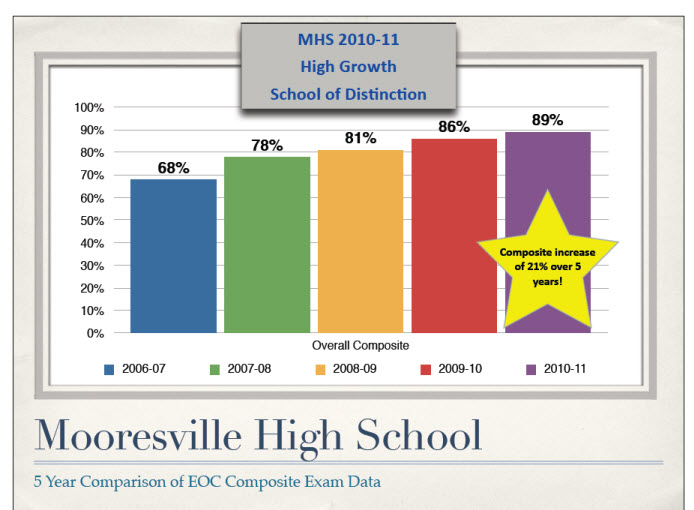
Test data from Mooresville High School shows significant improvement since the introduction of a 1:1 program.

According to the earlier New York Times article, increasing technology is not leading to increasing test scores. (OK, of course the argument is there if test scores are in any way an appropriate measure of learning, but for the sake of this post, I am accepting it – a bit.) Yet, this Washington Post article links to a report from a school district in Mooresville City, NC, that has demonstrated significant test gains after thoughtful introduction of a 1:1 program.

These gains are impressive. Their 1:1 program likely contributed to the gains, but also consider these quotes about the learning philosophy in the district:

  • In several classrooms, I couldn’t tell where the front of the classroom was… The whole space was a learning environment, and the technology was just part of the infrastructure. (page 3)
  • …you’ll find that Mooresville isn’t just passing out laptops — it’s changing the very dynamics of the classroom… Teachers say it fundamentally has changed the way they do their jobs… Now students direct much of their own learning… In such an environment, teachers must learn to “trust kids like you never have before,” says Todd Wirt, principal of Mooresville High School. “The scary thing is giving up control.”