
Things about Dyslexia

I was so intrigued by this article, “20 Things Only Parents of Children with Dyslexia will Understand.”

I won’t repeat the article, but a few things of the twenty stand out that make life so very difficult for kids:

  • They feel dumb and stupid
  • They are exhausted by detail
  • They can be disorganized
  • They are not lazy or unmotivated — (but everyone thinks they are!)

But what people forget is the many, many gifts that dyslexics have — it’s just how schools are structured makes these kids struggle so much. Here are the gifts:

  • They view the world holistically
  • They are visual thinkers
  • They see solutions/things that others do not
  • They often have above average intelligence
  • Their sense of hearing is exceptional

The conclusion of the article is key:

Unfortunately, learning has been so intimately tied to reading that they have been at a clear disadvantage. Things are rapidly changing; however, in this wonderful age of technology. We are reaching a point at which we will be able to honor all learning styles, not just those that have traditionally met with success.

Schedules

Fantastic idea about how to help high school students get ready for college — and I think it would help them STAY in high school!

Nick Stoneman writes about his school that schedules seniors in a way that gives them more autonomy over their day. In Nick’s words, this so-called “fifth grade schedule” is a problem: “Complacency is a risk when students have their time managed for them, as are both absenteeism and a lack of engagement.”

Even the brightest, most successful high school students have trouble when faced with the unstructured schedule of college.  This approach with a phased-in schedule would be a great way to give kids a safer place to experience this schedule, as well as keep kids engaged. Seniors are DONE with school by their last year, and giving them more responsibility and freedom could be a great way to keep them engaged.

Would some of them abuse the privilege? Of course. Guess what: they already find ways to sneak out of class and even if they are in class, they aren’t always present.

Will this happen? In most schools, no way, at least not for most kids. You’ll hear about transportation issues. You’ll hear that kids need to be in school. The transportation issue is real, although there must be ways to work around it.

Figure it out.

Shut-Down Learners

I have never posted just about the Shut-Down Learner concept by Dr. Richard Selznick. I’ve referred to it, but need a more thorough post.

I ran across Dr Selznick’s concept of the Shut-Down Learner about a year ago. It completely fits.

From his article, “When Learners Shut Down,” these are characteristics of a shut-down learner (before shutting down):

  • Tuning out in circle time
  • Highly spatial and visual learners
  • Active or over-active
  • Difficulty with language-based activities such as reading and writing

We’ve got three of the four.

Watch this video for an overview.

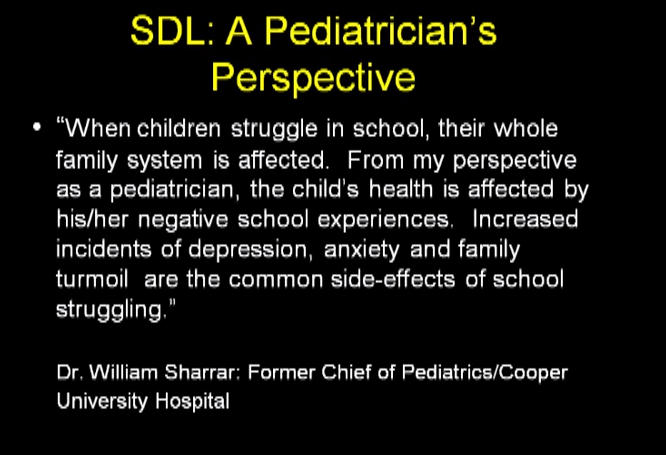
Screenshot of his PowerPoint that is it in a nutshell.

Screen Shot 2015-09-16 at 11.28.53 AM

“I Don’t Care”

Short piece from Edutopia today about Strategies for Reaching Apathetic Students.

This could be my daughter. I’m sure she looked like the stereotypical apathetic student. I know she was on her phone quite a bit. She didn’t take notes. She hated group work. She rarely did homework in the last two years of high school. She failed many tests. She hated writing papers. She was, I am sure, quite sassy in class. (She did, however, actively participate in class discussions. I regularly heard from teachers about how well she did in discussions, about how she had very astute observations and offered critical analysis.)

While her behavior may indicate that she didn’t care about school or anything, I can guarantee you that she did care. She cared so deeply that her struggles and difficulty meeting everyone’s expectations – difficulties that are not her fault, and are not because she’s not intelligent or talented – triggered serious anxiety and depression. Honestly, the “disabilities” are only disabilities in an academic setting like her high school. Look at the things she didn’t do: homework, tests,  writing. Hmmmmm — does that suggest a text based disability? YES! And, as she is a strong introvert, group work in class was excruciating.

As the article said, it became easier to say “I don’t care” than “I need help.”

In her case, the “I don’t care” came from hidden learning disabilities that she masked well that eventually manifested themselves in mental illness. It came from a school environment (both physical and pedagogical) that did not fit her needs. It came from a system that meant teachers had way too many kids to track. She switched teachers every trimester, so few teachers ever really go to know her to get below the “I don’t care.” It came from a learning environment that valued rote memorization and testing over creativity and critical thinking. The huge school and large classes meant that teachers had to do the easy-to-grade assessments, like multiple choice tests, as opposed to projects or more creative ways to express learning.

So, next time you see a student that doesn’t seem to care, don’t immediately blame them. Take a closer look. I bet there’s something else going on.

Self Directed Learning

An article in MindShift, “Is School for Everyone?” discusses a concept that allows teens to fully direct their own learning, with appropriate adult mentorship and support.

Ken Danford founded North Star, a center that enrolls teens and allows them to learn on their own. A former middle school teacher, he saw too many kids damaged, disengaged and unable to learn. He has seen some amazing success stories out of North Star. There are apparently a few other places like this around the country. Students do have to take a GED or something in order to officially get a high school diploma. Many of these students do very successfully go on to college.

This would’ve been an ideal option for my daughter. Like the students in the story, she has significant anxiety around school and basically shut down. It would’ve taken her a few months to destress and come out, but I think she would’ve flown if given the proper adult mentorship and guidance, and allowed to learn at her own pace about things that inspired passion.

Would she have learned high level chemistry? Nope. Would she, perhaps, have explored a Mozart opera in depth? Probably. She may have learned to make films, done ceramics, listened to some great literature, taken tons of pictures, written some scripts, done some professional theater. This list could’ve been long. Instead, she was forced into classrooms with 30 kids, filled out worksheets and taken bubble tests.

We are hopeful that while college is still “formal” academic experiences, the fact that it is more self directed will allow her some more positive learning opportunities. Keep your fingers crossed.

And watch Ken’s TED Talk:

“Fixing” ADHD

Love this NYT article (A Natural Fix for ADHD) about ADHD and how it was an evolutionary advantage back in the days of nomadic living. ADHD is NOT an illness — it’s our culture that makes it so.

Interesting theory about the recent “rise” in diagnosis:

I think another social factor that, in part, may be driving the “epidemic” of A.D.H.D. has gone unnoticed: the increasingly stark contrast between the regimented and demanding school environment and the highly stimulating digital world, where young people spend their time outside school. Digital life, with its vivid gaming and exciting social media, is a world of immediate gratification where practically any desire or fantasy can be realized in the blink of an eye. By comparison, school would seem even duller to a novelty-seeking kid living in the early 21st century than in previous decades, and the comparatively boring school environment might accentuate students’ inattentive behavior, making their teachers more likely to see it and driving up the number of diagnoses.

Why are there not so many adult cases? Because adults get to choose their careers. You don’t choose a desk job of routine tasks if you are ADHD. You chose to start a small company or do something stimulating, like an ER doctor or firefighter.

School gives kids so little choice. It forces them to sit still — awful — for far too long during the day. They are fed information, and sit passively in school — no wonder kids with ADHD have trouble. Even kids without ADHD have trouble.

As the article suggests, let’s put kids with ADHD in situations in which they can thrive. And they can. Reinforce the positives of this, take advantage of it. Don’t keep crushing these poor kids by putting the round peg in the square hole!

ENFP

Oh my goodness — I have to post this blog: “25 Struggles Only ENFP’s will Understand” by Heidi Priebe.

I am a confirmed ENFP, very strong on the E and the P for sure. This post cracked me up. I also really appreciate it  because it explains things and maybe will let me feel less guilty!

Take #4:”Having a thousand great ideas that you never follow through on.” That would be me. And then I feel guilty about never finishing anything.

Or #12: “Stressing out friends and acquaintances who don’t like straying from the original plan.” That’s work – I am always more of a “we’ll do what seems right when we get there” rather than setting out solid, unmoving goals. I know people get frustrated with that, but then again, I get frustrated when those solid goals turn out to not be the right ones and there isn’t any flexibility.

At home, I am lucky enough to have a husband who goes with the flow. He’s a saint.

#14: “When you have to complete a task that you simply cannot find a way to make fun.” Yup. Enough said.

#18 – not so true: “Others being surprised that you hold such strong opinions and beliefs, despite your easy-going nature.” I’m pretty loud and outspoken about things I believe in strongly…..

Not sure if this all is ENFP or ADHD. Who cares!

Meaningful Learning

Sam Tanner is another teacher that inspires me. He isn’t a national thought leader – yet – but his head is in the right place. While he actively avoids technology himself and in his classroom, he has the same mindset about education that attracts me to the digital advocates. He is a perfect example that it isn’t the device that makes quality education, it’s the teacher, the philosophy and the pedagogy.

Sam blogs. It is wacky (his word), irreverent and honest. As he prepares to leave public high school teaching for the hallowed halls of higher education (where I’m sure he will continue to challenge the status quo in his own quiet and very meaningful way) I have enjoyed his recent observations on public high schools.

For example:

I proctored an ACT test two weeks ago. Simply put, here is what I think after being a high school teacher for twelve years: building art with high school students is meaningful and testing them isn’t….if what you are advocating limits creative potential, I’m not interested. I’d rather spend my time with people making new, strange things. That is my conception of education, naysayers be damned.

Fortunately for me, my daughter had the opportunity to take a number of classes with him. It’s about all that got her through school. I’m not sure that he fully understand yet what a gift he has been to the students lucky enough to work with him.